Welcome!

The Book Club is open to all. We are currently meeting on the Second and Fourth Wednesday of every month, (every other Wednesday) 7.30 til whenever, at The Red Wire Studios, 69 Victoria Street, (www.redwireredwire.com).

Every time the text is different, brought by someone different. Text can be a short story, an exerpt, a caption, an article, a poem - anything that has captured your imagination.
Anyone can join in, Everyone is welcome.

We have already covered a wide variety of interesting texts. This blog archives all the texts we have looked at so far... Feel free to read along with us and definitely write your own comments...

Also, please do sign up to the mailing list at the bottom of this page to receive monthly updates and notifications of future meetings.

Thursday, 4 June 2009

Cormac McCarthy - The Road

Monday 01 May 2009

The Road by Cormac McCarthy.
Published by Alfred A. Knopf, 2006

Group Selection

A father and his young son walk alone through burned America, heading slowly for the coast. Nothing moves in the ravaged landscape save the ash on the wind. They have nothing but a pistol to defend themselves against the men who stalk the road, the clothes they are wearing, a cart of scavenged food - and each other. '

The Road is a novel by American writer Cormac McCarthy. It is a post-apocalyptic tale of a journey taken by a father and his young son over a period of several months, across a landscape blasted by an unnamed cataclysm that destroyed all civilization and, apparently, most life on earth. The novel was awarded the 2007 Pulitzer Prize for Fiction and the James Tait Black Memorial Prize for Fiction in 2006.

Tuesday, 21 April 2009

Karls Diary


Extract from Karl's Diary from The World of Karl Pilkington by Karl Pilkington.

Published by Harper Collins in 2006.

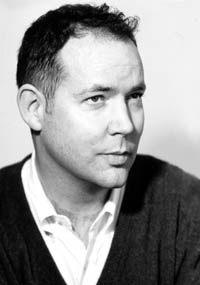
When Karl Pilkington's perfectly spherical head first reared up on the Ricky Gervais Show podcasts, you'd have been forgiven for assuming that he was merely the daft mate from the pub who'd been brought along to make up the numbers. As it turned out, Pilkington became the main reason for tuning in each week, effortlessly outpacing Gervais and Stephen Merchant when it came to tickling the funnybone of the nation. A true idiot savant, Pilkington possessed a brain so strangely wired that no opinion was too bird brained for him to adopt as gospel truth. A typical observation would be, "If you saw an old fella eating a Twix, you would think, 'That's a bit weird, innit?'" On the strength of such inspired nonsense, he gathered a huge cult following. Gervais went so far as to describe him as the funniest man in Britain.

Selected by Alan Williams

Monday, 6 April 2009

One No, Many Yeses


Excerpt from One No, Many Yeses: A Journey to the Heart of the Global Resistance Movement by Paul Kingsnorth.
Published by Simon and Schuster in 2003

It could turn out to be the biggest political movement of the twenty-first century: a global coalition of millions, united in resisting an out-of-control global economy, and already building alternatives to it. It emerged in Mexico in 1994, when the Zapatista rebels rose up in defiance of the North American Free Trade Agreement. The West first noticed it in Seattle in 1999, when the World Trade Organisation was stopped in its tracks by 50,000 protesters. Since then, it has flowered all over the world, every month of every year. The 'anti-capitalist' street protests we see in the media are only the tip of its iceberg. It aims to shake the foundations of the global economy, and change the course of history. But what exactly is it? Who is involved, what do they want, and how do they aim to get it? To find out, Paul Kingsnorth travelled across four continents to visit some of the epicentres of the movement. In the process, he was tear-gassed on the streets of Genoa, painted anti-WTO puppets in Johannesburg, met a tribal guerrilla with supernatural powers, took a hot bath in Arizona with a pie-throwing anarchist and infiltrated the world's biggest gold mine in New Guinea. Along the way, he found a new political movement and a new political idea. Not socialism, not capitalism, not any 'ism' at all, it is united in what it opposes, and deliberately diverse in what it wants instead -- a politics of 'one no, many yeses'. This movement may yet change the world.

Selected by Mike Pinnington

Monday, 30 March 2009

Playback from Eden to Watergate

Monday 30 March

Playback from Eden to Watergate from The Job: Interviews with William S. Burroughs.

Published by Penguin Classics, 2008

William Burroughs' work was dedicated to an assault upon language, traditional values and all agents of control. Produced at a time when he was at his most extreme and messianic, The Job lays out his abrasive, incisive, paranoiac, maddened and maddening worldview in interviews interspersed with stories and other writing. On the Beat movement, the importance of the cut-up technique, the press, Scientology, capital punishment, drugs, good and evil, the destruction of nations, Deadly Orgone Radiation and whether violence just in words is violence enough – Burroughs’ insights show why he was one of the most influential writers and one of the sharpest, most startling and strangest minds of his generation.

Selected by Richard Proffitt

Monday, 23 March 2009

The Whore of Mensa


Monday 23 March

The Whore of Mensa, from Without Feathers by Woody Allen.
Published by Random House, 1975

Click here to read http://woodyallenitalia.tripod.com/short-uk.html

Selected by Alan Williams

Monday, 16 March 2009

The Frozen Jug Band

Monday 16th March
The Frozen Jug Band, from The Electric Kool-Aid Acid Test, by Tom Wolfe. Published by Farrar, Straus and Giroux 1968

I looked around and people's faces were distorted...lights were flashing everywhere...the screen at the end of the room had three or four different films on it at once, and the strobe light was flashing faster than it had been...the band was playing but I couldn't hear the music...people were dancing...someone came up to me and I shut my eyes and with a machine he projected images on the back of my eye-lids...I sought out a person I trusted and he laughed and told me that the Kool-Aid had been spiked and that I was beginning my first LSD experience...

Selected by Flis Mitchell

Have I Broken Your Heart?

Monday 9th March
Have I Broken Your Heart? by Gordon Burn, article published in Review, Saturday Guardian, 07.03.09.

'Fifty years ago Philip Roth claimed that 'the actuality is continually outdoing our talents, and the culture tosses up figures daily that are the envy of any novelist'. In today's media-saturated world this is more true than ever, as epitomised by the tragic story of Jade Goody.'

Selected by Laura Robertson

Three Million Yen


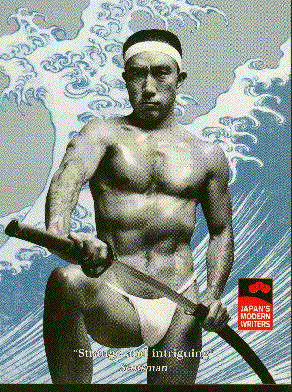
Three Million Yen from Death in Midsummer by Yukio Mishima, Published by New Directions, 1966

Yukio Mishima was the pen name of Kimitake Hiraoka, a Japanese author, poet, playwright, actor and film director, also remembered for his ritual suicide by seppuku after a failed coup d'état. Nominated three times for the Nobel Prize in Literature, Mishima was internationally famous and is considered one of the most important Japanese authors of the 20th century, whose avant-garde work displayed a blending of modern and traditional aesthetics that broke cultural boundaries, with a focus on sexuality, death, and political change.

Selected by Alan Williams

Monday, 23 February 2009

The Dialectic of Solitude

The Dialectic of Solitude
by Octavio Paz
Published in 1950

As well as the nine essays on his country's psyche and history that make up 'The Labyrinth of Solitude', this highly acclaimed volume also includes 'The Other Mexico', Paz's heartfelt response to the government massacre of over three hundred students in Mexico City in 1968, and 'Return to the Labyrinth of Solitude', in which he discusses his famous work with Claude Fell. The two final essays contain further reflections on the Mexican government.

Selected by Flis Mitchell

Generation X

Excerpt from Generation X: Tales for An Accelerated Culture
by Douglas Coupland
Published in 1991

Andy, Dag and Claire have been handed a society beyond their means. Twentysomethings, brought up with divorce, Watergate and Three Mile Island, and scarred by the 80s fallout of yuppies, recession, crack and Ronald Reagan, they represent the new generation- Generation X. Fiercely suspicious of being lumped together as an advertiser's target market, they have quit dreary careers and cut themselves adrift in the California desert. Unsure of their futures, they immerse themselves in a regime of heavy drinking and working in no future Mc Jobs in the service industry. Underemployed, overeducated and intensely private and unpredicatable, they have nowhere to direct their anger, no one to assuage their fears, and no culture to replace their anomie. So they tell stories: disturbingly funny tales that reveal their barricaded inner world. A world populated with dead TV shows, 'Elvis moments' and semi-disposible Swedish furniture.

Selected by Mike Pinnington

Funes The Memorious


Funes The Memorious
from Labyrinths (1962) by Jorge Luis Borges
First Published in 1942

Jorge Luis Borges was a literary spellbinder whose tales of magic, mystery and murder are shot through with deep philosophical paradoxes.

Selected by Richard Proffitt


Crow's Account of St. George


Crow's Account of St. George
from Crow by Ted Hughes
Published in 1970

Selected by Laura Robertson